
news-160616
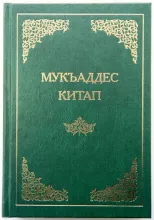
IBT has published the first-ever translation of the full Bible in Crimean Tatar, a Turkic language spoken by about a quarter of a million people, primarily on the Crimean peninsula in the Black Sea (related but not identical to the Tatar language spoken in Kazan and the Volga region of north central Russia). The translation team included Crimean Tatar writers together with specialists in the field of Bible translation from IBT and IBT’s international partner organization, Pioneer Bible Translators. The Crimean Tatar language is now one of about 550 languages worldwide that has a full translation of the Holy Scriptures.
The first translations of Scripture materials into Crimean Tatar (previously known as the Cuman language) were done in the 1340s by Franciscan monks, who translated Gospel passages including the prayer “Our Father”. These passages were added to the unique 13th century trilingual dictionary knows as the Codex Cumanicus...
conferences-0616
news-190516
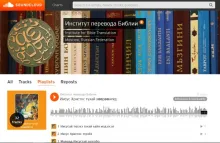
IBT invites speakers and students of the languages of the Russian Federation to visit a new IBT resource on SoundCloud, where one can listen to audio recordings of Bible translations online (including via mobile apps for Android and iPhone), and to download them. IBT’s Sound Cloud page already has Proverbs in the Adyghe language, Psalms in Yakut, Psalms in Tuvan, and Stories about Jesus in Buryat. Keep an eye out for new entries!
new-pub-080416
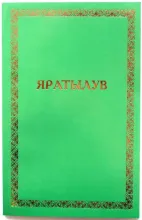
Since publishing the Nogai New Testament (Injil) in 2011, IBT has continued translation work on Old Testament portions into Nogai, a Turkic language spoken by about 100,000 people in the North Caucasus area of Russia. IBT’s translations of Ruth, Esther and Jonah were already published in 2005. Genesis is the first book of the Pentateuch translated by IBT into contemporary Nogai, coming almost 200 years after the Pentateuch was first published in Nogai.
new-pub-260316
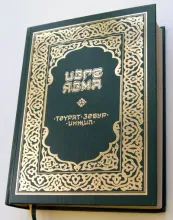
IBT has published the first-ever full translation of the Bible in the Tatar language. This is the fifth translation of a complete Bible into a non-Slavic language of Russia, following upon Chuvash, Tuvan, Chechen and Udmurt. Worldwide, the entire Bible has been translated into about 565 languages, now including Tatar. IBT’s Bible translation work into Tatar lasted more than 23 years. The work was carried out by specialists in linguistics, biblical studies, and the Tatar language from IBT, SIL and UBS, in cooperation with the Academy of Sciences of Tatarstan, and was printed with a stamp of approval from the Institute of Linguistics at the Russian Academy of Sciences.
new-pub-250316
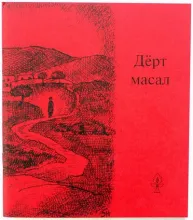
IBT has published a Kumyk-language edition of four parables from the Gospel of Luke: the Good Samaritan (10:30-35), the Wedding Feast (14:16-23), the Prodigal Son (15:11-32) and the Pharisee and the Tax Collector (18:10-14). This book was previously published by IBT in the Agul (2007) and Dungan (2015) languages. The edition contains 35 black-and-white illustrations. Produced by an artist from Adyghea (northwest Caucasus), the illustrations give a Caucasian visual perspective on the stories told by Jesus and bring the world of the Bible closer to Kumyk readers, who live for the most part in the Dagestan region of the northern Caucasus.
new-pub-180216
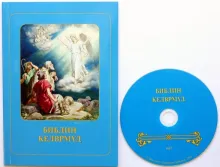
One of IBT’s newest publications is an illustrated edition of Bible Stories in the Kalmyk language. This is a collection of 58 short narratives taken from both the Old and New Testaments, beginning with Creation and ending with Revelation. It is a significantly revised and shortened form of the Children’s Bible, which IBT published in Kalmyk in 1998. Even though Kalmyk is an endangered language (only 44% of the ethnic Kalmyk population can speak their language), there has been a serious revitalization movement in progress among the Kalmyks over the past decade. One of the multitalented young activists in this movement who is working to strengthen her mother tongue is Elistina Shinyakaeva...
news-160216
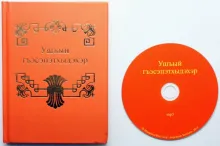
IBT has published the second print-run of the book of Proverbs in the Adyghe language (northwest Caucasus, approx. 117,000 speakers). The first print-run of 2014 was very popular and was distributed among Adyghes almost immediately.
news-280116
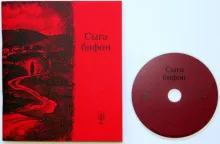
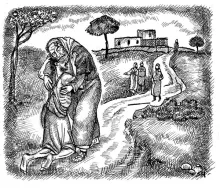
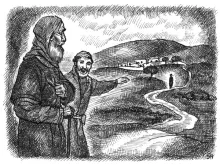
The Institute for Bible Translation has published a beautifully illustrated selection of four parables from the Gospel of Luke in the Dungan language. The selection includes the Parables of the Good Samaritan (10:30-35), the Wedding Feast (14:16-23), the Prodigal Son (15:11-32), and the Pharisee and the Tax Collector (18:10-14), and comes with an audio recording of the text on CD.
news-171215


Working in coordination with the Bible Society of Kyrgyzstan and the Orthodox Diocese of Kyrgyzstan, IBT has produced the Kyrgyz translation of the Six Psalms (Hexapsalmos) that are used in the Orthodox church service. In mid-December, IBT’s deputy director Marina Lomova presented the diocese with 200 copies of this translation, which was printed in Bishkek by Al-Salam Publishing House.